Reasonable Suspicion Requires Reasonable Action: The Courage to Think Critically Before You Report In a LinkedIn article, SPI Director Lori Clarke shared insights on how to interpret mandated reporting laws accurately and responsibly through “reasonable action.” “The Prevention Early Intervention Committee of the California Child Welfare Council is poised to lead comprehensive change in the reporting of child abuse and…

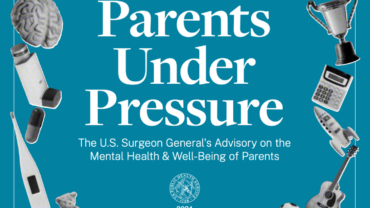
In a new advisory, U.S. Surgeon General, Vivek H. Murthy discusses the state of parent stress and wellbeing, and the impact on children and family units across the nation. Parents are raising our future leaders, community members, and professionals, so it is crucial to support their wellbeing in order to ensure sustainability of family health and growth. This issue transcends…
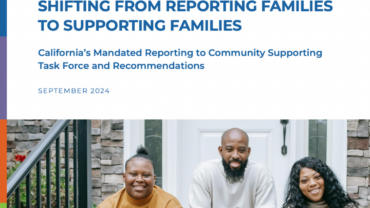
The Social Policy Institute is thrilled to share this celebratory announcement from the Mandated Reporting to Community Supporting (MRCS) Task Force: On September 4, 2024, the voting members of the California Child Welfare Council (CWC) unanimously approved the MRCS Task Force Report, and also requested that an implementation strategy to advance the Recommendations of the Task Force be created in…
In alignment with the Office of Child Abuse Prevention’s vision, and in partnership with Strategies 2.0 and CAPCs throughout the state, the Social Policy Institute has developed Best Practice Guidelines for California CAPCs. Child Abuse Prevention Councils (CAPCs) are the catalyst, convener and coordinator of the countywide approach to prevention of child maltreatment. Each CAPC prioritizes strategies for action that…
The 5 Protective Factors are widely known in the Family Strengthening Field as a way to increase family strengths and decrease the likelihood of child abuse and neglect. They can also play a significant role in preventing and reducing Adverse Childhood Experiences (ACEs) in children and families. In our newest knowledge to action brief, we discuss a 6th protective factor,…
The majority of people living in California have experienced at least one (1) adverse childhood experience (ACE). Fully 16% have experienced 4 or more ACEs. In SPI’s first ACEs Aware Knowledge to Action Brief, we focus on the challenges children face in the midst of adverse childhood experiences (ACEs) and how lasting impacts can be prevented or reduced using the…
Most of the time the joys of being a parent outweigh the frustrations. When the challenges of parenting accumulate and become overwhelming, parental stress can occur. According to the Center for the Study of Social Policy (CSSP), even though all parents experience stress, by increasing parental resilience, parents can effectively manage stressful situations and help ensure positive outcomes for their…
Supporting young children to develop social-emotional skills is found to have a profound effect on their health and development in early life and as adults. Social-emotional competence, which includes self regulation, executive functioning, emotional and impulse control, and social and communication skills, influences children’s cognitive and language development, academic achievement, and mental health (CSSP, n.d.). Access the Knowledge to Action…